 0
0
 0
0
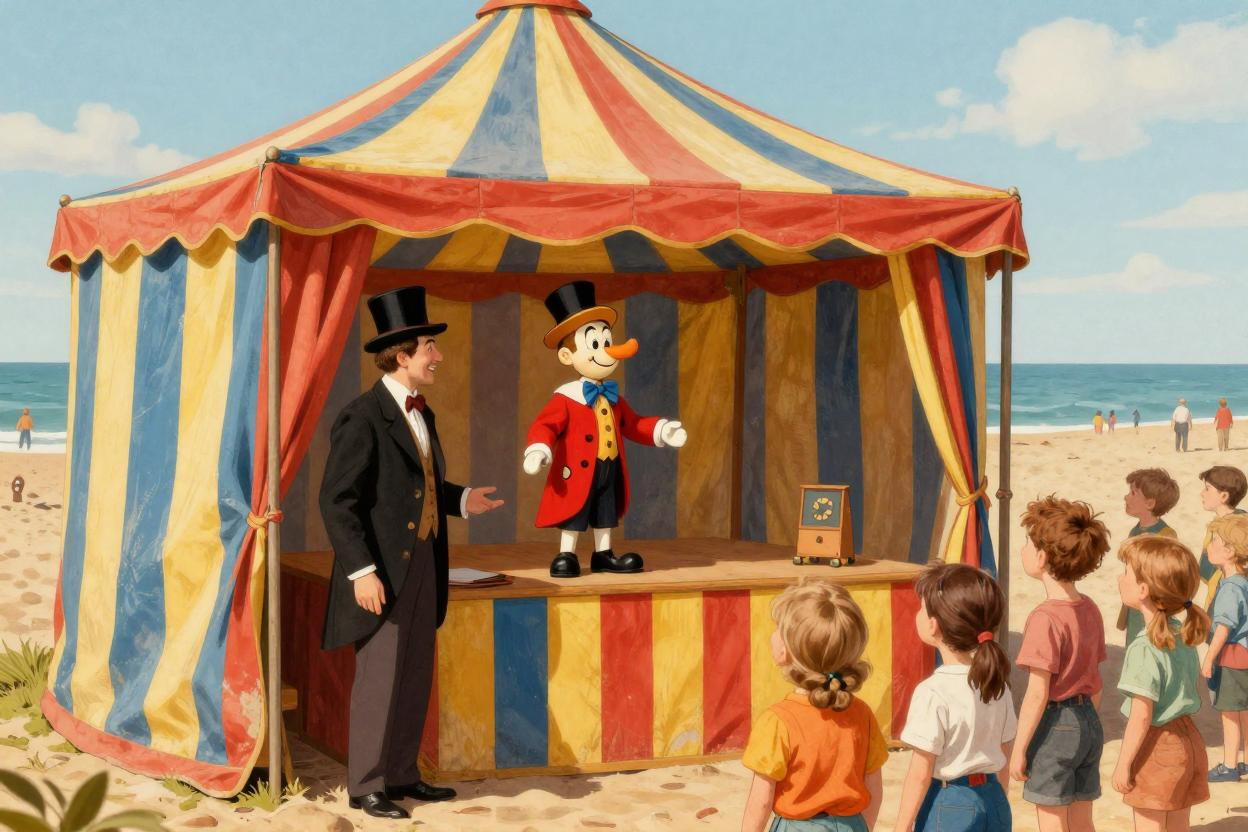
Reflecting on what was once a typical seaside holiday – but for how much longer?
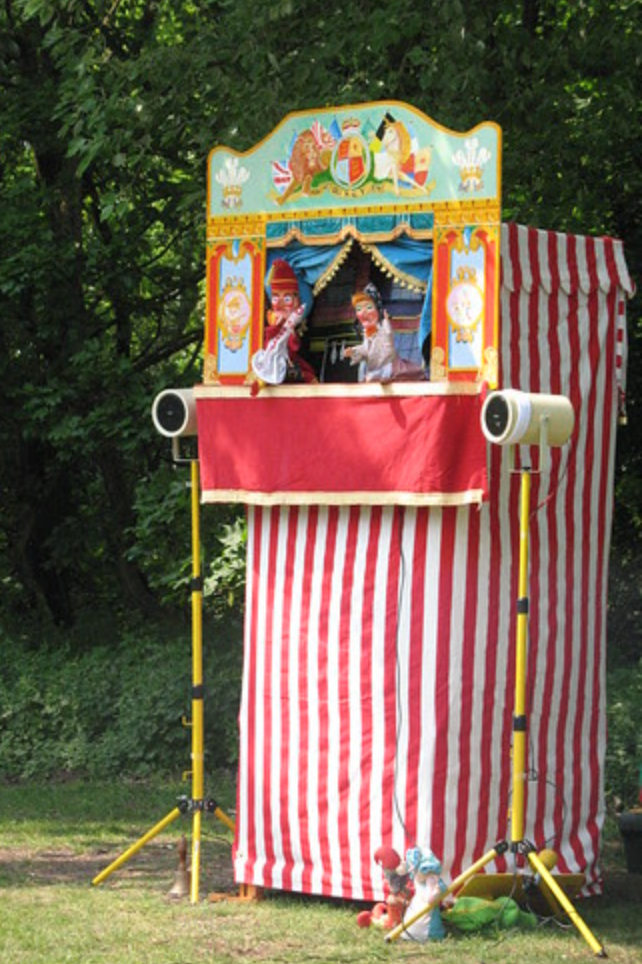
I had a great Summer break, watching a show about a dysfunctional family, complete with husband and wife battering, child cruelty, and assault on a police officer.
We had such fun, and everyone laughed when the baby was thrown out of the window. What!!!
Ah yes, good ol’ Punch and Judy. It’s somehow comforting to know that the story hasn’t yet been ‘sanitised’ by the politically correct lobby (also known as the British Taliban or the Woke Lobby), and is much the same as when I first saw it as a toddler (many years ago).
For those ignorant of such quaint customs, the story is roughly as follows:
Act I — The Baby
Mr. Punch arrives, followed by Judy. They kiss and dance before Judy requests Mr. Punch to look after the baby. Punch fails spectacularly: he sits on the baby in a failed attempt to “babysit,” puts it through the sausage machine, and then drops it out the window onto the floor.
Cue: little child rushes to pick it up and on tippy-toes tries to hand it back — can’t quite reach. Then a slightly taller child tries — same result. This continues until finally one of the older children in the audience has sufficient height to hand the baby back to Mr. Punch.
Act II — Knockabout
Judy returns, is outraged, fetches a stick, and the knockabout commences. A policeman arrives in response to the mayhem and is himself felled by Punch’s slapstick. All carried out at breakneck and farcical speed with much involvement from the gleefully shouting children in the audience. NB: Have any of the children witnessed this behaviour at home? Cue: Intervention by any representative from Social Services who happen to be watching the show.
Act III — Dinner Time
Enter Joey the Clown, who suggests it’s dinner time. This leads to the production of a string of sausages which Mr. Punch must look after. Cue even greater audience participation with the arrival of the Crocodile, which Mr. Punch does not see until the children shout out to let him know. Cue: shouts of “it’s behind you!”
Punch’s subsequent struggle with the crocodile leaves him in need of a Doctor, who arrives and attempts to treat Punch by walloping him with a stick — until Punch reciprocates.
Act IV — The Counting
Punch counts his “victims” by laying puppets on the stage, only for Joey the Clown to move them about behind his back to frustrate him.
Act V — The Ghost
A ghost appears and gives Mr. Punch a fright before it too is chased off with a slapstick.
✂️ A Note on What’s Changed
In the version I remember, a hangman would arrive to punish Mr. Punch, only to himself be tricked into sticking his head in the noose. This seems to have been expunged from this most recent performance, so I guess we have moved on with the times. Maybe later versions will include an ASBO or community service!
Anyway, great fun was had by all, and I’m so pleased I haven’t succeeded in growing up yet!
The History of Punch & Judy
The history of Punch and Judy spans over 350 years and traces a fascinating journey from Italian comedy theatre to British seaside culture. Here’s what the historical record reveals:
Origins (16th Century Italy)
Punch and Judy derives from the commedia dell’arte, a 16th-century Italian form of comic theatre featuring masked characters and improvised performances cantered on social satire and slapstick humour. The character Punch originates from Pulcinella (or Pulcinello), a hunch-backed, mischievous figure known for his squeaky voice and violent antics.
Arrival in England (1660s)
Italian puppeteers brought Pulcinella to London in the early 1660s, where the character was anglicized as “Punch” and adapted to English tastes. The first recorded English performance was noted by diarist Samuel Pepys in May 1662. According to scholarship, the character was introduced by Italian puppeteer Pietro Gimonde from Bologna around 1662. Originally, Punch was performed as a string marionette rather than the hand puppet familiar today.
Expansion Through the 18th Century
Throughout the 18th century, Punch shows proliferated at fairs, markets, and street corners across Britain. An important factor was the 1737 Licensing Acts, which censored most theatrical performances—but puppet shows were exempt because they were presumed to include only traditional material. This loophole allowed playwrights like Henry Fielding and Charlotte Charke to continue satirical work through puppet stage].
During this period, the show developed its characteristic ensemble: Punch, his wife Judy, their infant, a crocodile, a constable, and other stock characters who fell victim to Punch’s signature weapon—the slapstick (a prop that makes a slapping sound).
Transformation to Hand Puppets (Early 19th Century)
A major shift occurred after 1825, when Punch transitioned from marionette to hand-glove puppet. This gave the performer—now called “Professor“—direct control of Punch’s arms and head, enabling more dynamic physical comedy and the iconic swinging arm movements.
Seaside Staple (19th-20th Centuries)
As cities grew and street performance became difficult due to traffic, puppeteers increasingly moved to British seaside resorts. The loud, energetic, often brutal comedy became marketed as family entertainment. Over subsequent decades, scripts were refined and some violent episodes softened, though Punch’s anarchic defiance remained central.
By the late 20th century, Punch and Judy was recognized as “a staple of the British seaside scene” and celebrated its 350th anniversary in 2015.
Cultural Legacy
Despite ongoing debates about its violent content, the show has endured as an emblem of English popular culture. Scholarly works like George Speaight’s Punch and Judy: A History (1970)—now exhibited at the Victoria and Albert Museum—and Michael Byrom’s research document its evolution over three and a half centuries.